
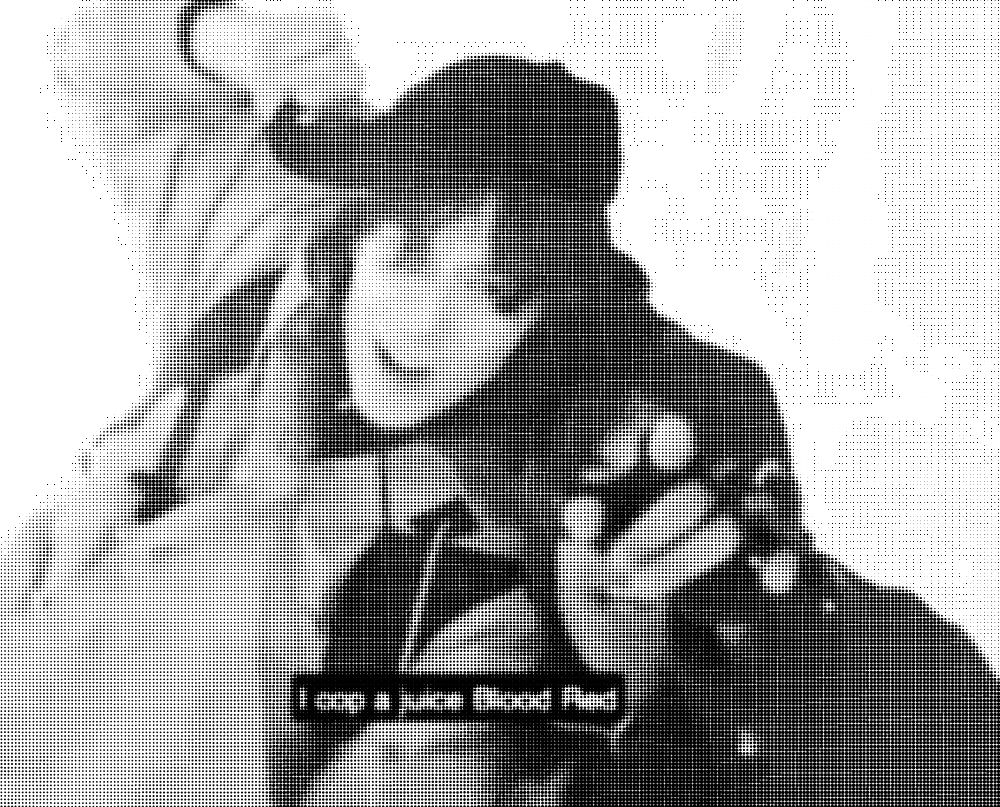
I remember the day I decided to come out. I was in my room alone, in the dark, watching a video of two young men prancing about an urban snowy landscape. I had been watching all of their videos – but was obsessed with this one. Something about these angels really spoke to me. Why was I not being honest with myself? Why was I lying to people? Why don’t I just come out? Do it for you, amen. And so I did. From that day forward, I began telling people I was a fan of Bladee.
Come 2018 when I was in college, there was a stigma around Soundcloud artists and “cloud rap” specifically. I wouldn’t go as far as saying fans of Bladee were an oppressed class, but it wasn’t something you could play without begging, especially if you wanted to curate an environment conducive to not scaring the hoes. The answer was often terse: “I don’t like retard rap.”
Aesthetics are preferential, and I’m not here to convert anyone. If you don’t like it – fair. Shit, I even call the music retard rap myself. Its hyperbolic production and nonsense lyrics delivered through tin can autotune creates a sound preferential to texture rather than precision. What really bothers me is that “retard” connotes a damnation of the present.
By “contemporary music” I mean music that has “newness”; music released to not much fan fare, from smaller accounts with low follow accounts, often pushing the boundaries of genre. Soundcloud is littered with aspiring artists doing just that, little specks of light hoping to become stars. Artists that have established fan bases, even modern ones, are too concrete, their existence is validated by the attention they command, thus diminishing their “newness”.
The argument goes something like this: new music has capitulated to reels and algorithms, becoming an asset to farm attention from people. Thus, music has been reduced to slop for dopamine-addled zombies. The demand is for music that is “authentic” or has “soul”. People act out their nostalgia in two ways: either by retreating to the past entirely, or by clinging to genre music—folk, indie rock, proven sounds—signals of ‘real music’.
Sure, I can appreciate this sentiment. I don’t deny that the present is in a sort of crisis – the greatest works are those that can transfer awe into their subject, speaking directly to their souls. Older music can be great, I personally love 80’s post punk, and 90’s trance music. However giving up the present is a reduction of your agency – it is the only art which your taste has influence over. It offers an ever shifting mirror between you and your current moment, one where you see exactly what you want.
Engaging with “newness” is a dialogue between creator and listener. Each listen, like, and comment, acts as a feedback loop directing an artist towards the creation of a sound, embedding a sort of vitality into your music. Your participation is an act of creation, giving you stake in what you listen to. This is a more powerful way of engaging with the present, you’re not beholden to things that are proven, rather you are beholden to proving things. Not to be weird, but I feel proud when an artist succeeds, I know that I’ve participated in shaping the world, my taste has moved the needle forward.
Taste is a personal attribute, the set of a multitude of preferences. In music it includes the sounds, melody, lyricism, etc. Taste also arrives from perspective, how you see and judge the world. Often this is an intangible feeling, when you’re out and about and everything is on fire but you, for some reason, cannot stop smiling. Art – good art for that matter – is a reflection of that. It materializes the unexplainable, it reflects what you cannot see, showing the outline of your soul.
Speaking towards the soul is exactly what makes consuming art, music in particular so important. Music from the past, and genre revival, muddy themselves – these songs are artifacts, embedded with history, handpicked by the curatorial hand of time. There is a real emotional vulnerability to putting yourself into the music you listen to. The validity of newness is your opinion, no life rafts.
It’s precisely the staticness of history that kills the vitality of music. It’s as if the songs were enclosed in a glass museum case next to a description outlining exactly what you are looking at. There is no creation with history, even if you go for its obscurities, there is no hope in reanimating the sounds with your taste. Your act of listening has no vitality, you’re playing with a corpse.
Genre music might even be worse. Recommending people listen to modern folk or indie rock is a sin, you’re the reason Mark Fisher killed himself. Music in this milieu is more zombified than any tik tok song that afflicts “brain rot”. Take indie rock, a genre of godless reanimation. Time and time again four piece bands make the same songs legitimized by the bands that came before them. To use Mark Fisher’s example, would you know that the Arctic Monkeys were a band from the future if you heard them in the 1990s? These husks for songs take their place alongside the relics of the past, taking their blueprints as terms for their own validity. Where is your place in all this mess?
These zombies aggregate online, on Pitchfork, RYM, or theNeedledrop. All of these sites perpetuate the same sin – they’ve reduced music to material that is measured and ultimately graded. Reviews often combine a historical hodgepodge of musical references, and a litany of verbal descriptors that pin music to the page. Every time Anthony Fantano called a synth “icey” I prayed his house would flood. By measuring the music, they offer their language for regurgitation, a cop out to grappling with music on it’s terms.
I’m reminded of a meme with a man and his dog, looking towards the foggy woods ahead, the man pontificates through thought bubbles the various places where music discord occurs, while the dog simply thinks “banger tbh”. It’s not just that the dog is intelligent that makes the image so apt, but that he is naive to the things a human may be. Naivety would allow us to return to art’s first principles, to inspire awe in its viewer so they may find their soul reflected within the world.
This is the opportunity of the present; its naivety allows you to beat to the rhythm of your own drum, to find works that viscerally move you as you uncover the essence of who you are. Sure, slop exists, but I would rather wade through the muck to discover something I love than inherit ghostly artifacts. I’ve loved Soundcloud for exactly that reason. Its underbelly exists so detached from the mainstream that even its algorithms offer music far more original than an intentional search in the archives of rate your music.
Go see a show, something you’ve never seen before. Try and appreciate the texture of the music from the stage, judging only whether or not you like what you hear. Your participation becomes an act of creation; the present is made of millions of fireworks, all moments bright, but not long lasting. Within seconds of their ignition, they vanish into darkness. Your attention can cause a chain reaction, one that leaves a lasting glow—the advent of something beautiful. Unlike the past, the present is alive; what you experience is visceral, what remains will be beautiful.
 LOSER Magazine